
 Wildlife
of USA
Great Gray Shrike
Other Songbirds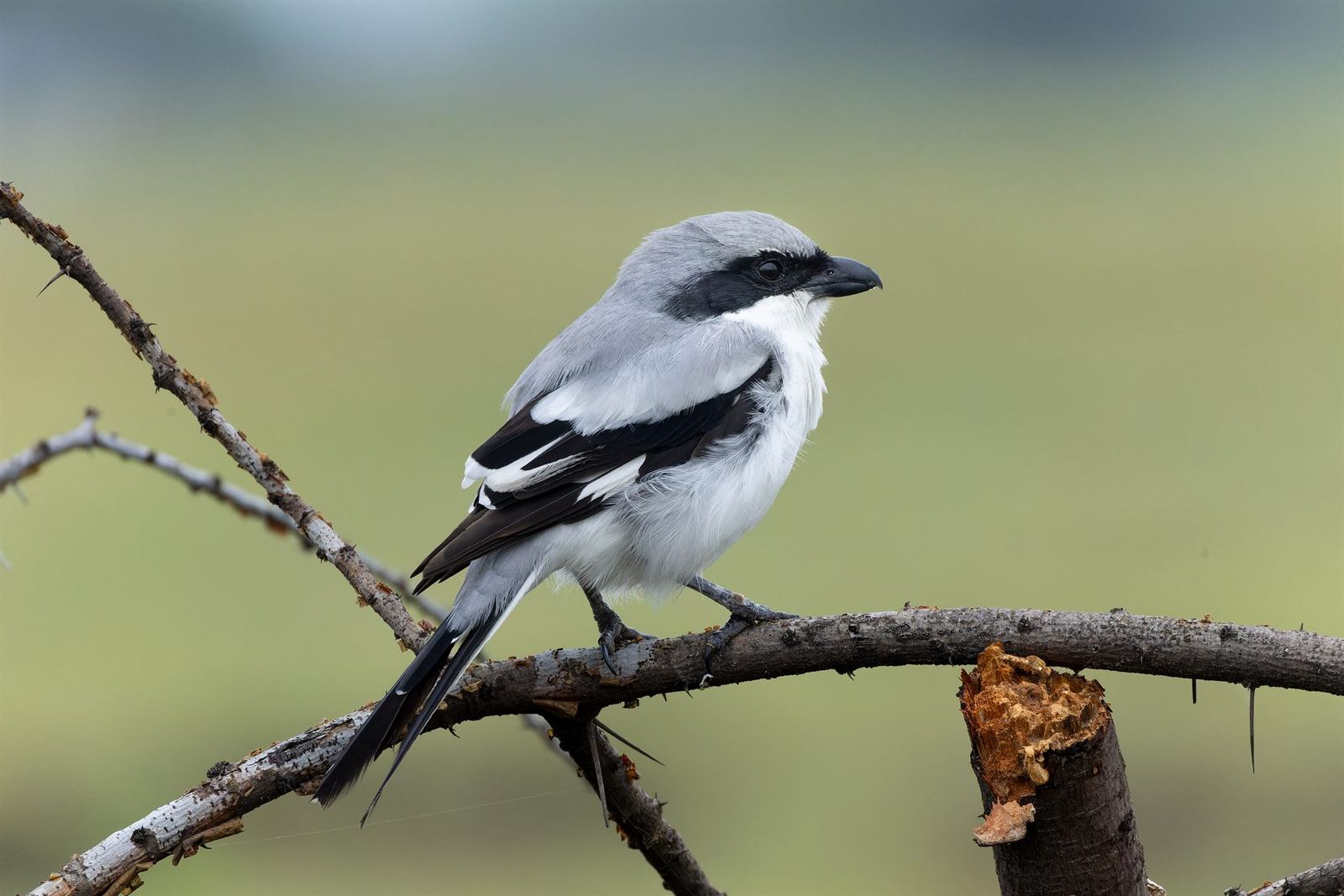
Photo: Tisha Mukherjee · CC BY-SA 4.0 (May be cropped or resized)
Lanius excubitor
U.S. national list: unknown
Basic stats
Diet
Mainly rodents and other small vertebrates
Habitat
Open country with scattered trees, bushes or scrub
Range
Breeds across northern Europe and Asia; most populations winter farther south in temperate regions
Clutch size
Averages about 5 eggs
Size
22–26cm
Wingspan
30–36cm
Weight
Averages about 63g
The Great Gray Shrike is a large predatory songbird with pearly-grey upperparts, white underparts and a black mask through the eyes. Males and females look alike. White patches in the wings become conspicuous during its direct, slightly undulating flight, and the stout hooked bill suits its carnivorous diet. Adults measure 22–26 cm, span 30–36 cm and average about 63 g (Wikipedia, general species account; AVONET, Tobias et al. 2022).
Across northern Europe and Asia, the species breeds mainly at high latitudes and most populations move south into temperate regions for winter. It occupies open country with scattered trees, bushes or scrub, using prominent perches as hunting lookouts. Rodents make up more than half the reported diet, while other small vertebrates are also important. AnAge gives an average clutch of about five eggs (Wikipedia, general species account; EltonTraits, Wilman et al. 2014; AnAge).
Records of Great Gray Shrike in the USA
This bird's natural range lies outside the USA (AviList v2026), so these are records of wandering, escaped or introduced birds, not places to expect it.
GBIF records grouped by protected area. They show where the species has been reported, not that it is there now, and they are not population counts.
Recorded in 42 protected areas (1891–2009). The 8 with the most records:
- Lake Superior State Forest - Newberry Unit: 44 records (1925–2002)
- Katmai National Park and Preserve: 43 records (1919–2005)
- Katmai Wilderness: 34 records (1919–2005)
- Routt National Forest: 20 records (1934–1947)
- Glacier Bay National Park and Preserve: 19 records (2003–2008)
- Adirondack Park: 15 records (1919–2009)
- Yukon Delta National Wildlife Refuge: 13 records (1998–2008)
- Denali National Park: 8 records (1986–2002)
Quick answers
- What does the Great Gray Shrike eat?
- Mainly rodents and other small vertebrates
- What habitat does the Great Gray Shrike live in?
- Open country with scattered trees, bushes or scrub
- Where is the Great Gray Shrike found?
- Breeds across northern Europe and Asia; most populations winter farther south in temperate regions
- How many eggs does the Great Gray Shrike lay?
- Averages about 5 eggs
- How big is the Great Gray Shrike?
- 22–26cm
- What is the wingspan of the Great Gray Shrike?
- 30–36cm
- How much does the Great Gray Shrike weigh?
- Averages about 63g