
 Wildlife
of USA
Common Crane
Cranes & Rails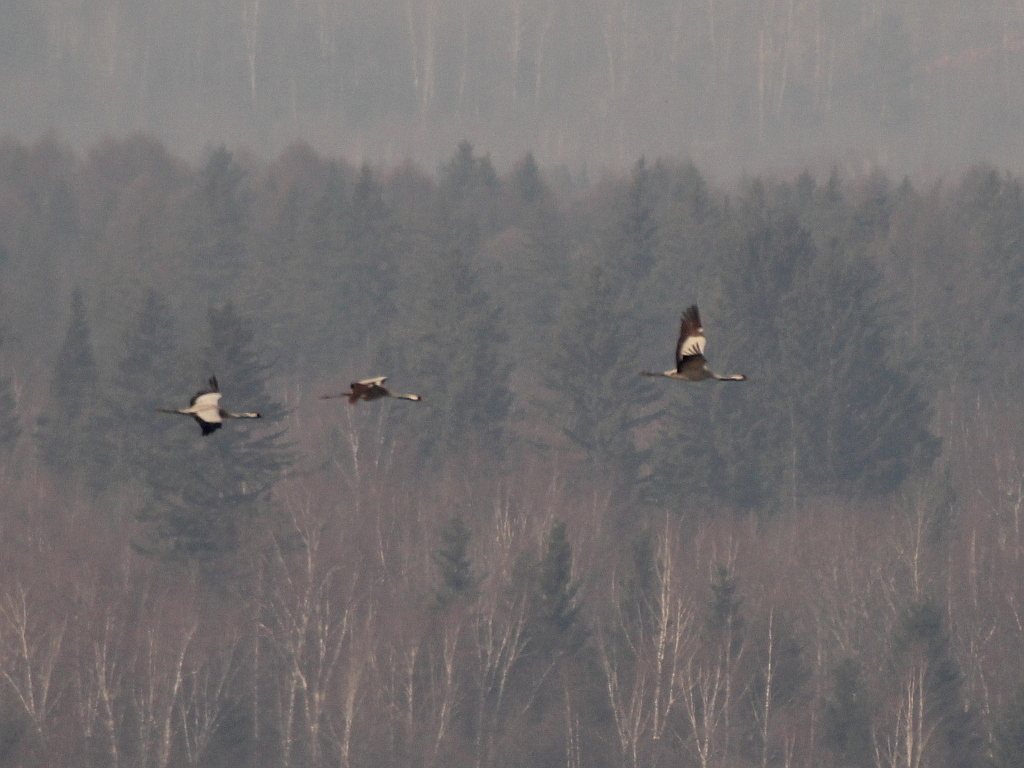
Photo: (c) Andrew Bazdyrev, some rights reserved (CC BY) · CC BY 4.0 (May be cropped or resized)
Grus grus
U.S. national list: unknown
Basic stats
Diet
Mostly seeds and other plant matter, with fruit, invertebrates and small vertebrates
Habitat
Wetlands, bogs, marshes and nearby open country
Range
Breeds across Europe and northern Asia; winters farther south in Europe, North Africa and Asia
Size
100–130cm
Wingspan
180–240cm
Weight
Averages about 5500g
The Common Crane is a tall slate-grey bird, 100–130 cm long with a wingspan of 180–240 cm. A blackish forehead and face, bare red crown and white stripe running from behind the eye toward the upper back form its distinctive head pattern. Black flight feathers and drooping greater coverts create a full, plumed rear profile. Its loud trumpeting calls carry far during flight and display (Wikipedia, general species account).
The species breeds across Europe and northern Asia, using bogs, marshes, wet forest openings and other sites with water nearby; many populations migrate south for winter (Wikipedia, general species account). Feeding is largely terrestrial and omnivorous. Plant material and seeds predominate, supplemented by fruit, invertebrates and small vertebrates (EltonTraits, Wilman et al. 2014). Courtship and social displays include leaps performed with the wings raised (Wikipedia, general species account).
Records of Common Crane in the USA
This bird's natural range lies outside the USA (AviList v2026), so these are records of wandering, escaped or introduced birds, not places to expect it.
GBIF records grouped by protected area. They show where the species has been reported, not that it is there now, and they are not population counts.
Recorded in 9 protected areas (1999–2023). The 8 with the most records:
- Coconino National Forest: 592 records (2016–2020)
- Jasper-Pulaski Fish and Wildlife Area: 93 records (1999)
- Lake Mead National Recreation Area: 59 records (2013)
- Bosque del Apache National Wildlife Refuge: 35 records (2020–2021)
- Muleshoe National Wildlife Refuge: 32 records (2014–2015)
- New Sweden Wildlife Management Area: 24 records (2009–2011)
- Bitter Lake National Wildlife Refuge: 16 records (2014–2015)
- Port Blakely Forest Land: 4 records (2023)
Quick answers
- What does the Common Crane eat?
- Mostly seeds and other plant matter, with fruit, invertebrates and small vertebrates
- What habitat does the Common Crane live in?
- Wetlands, bogs, marshes and nearby open country
- Where is the Common Crane found?
- Breeds across Europe and northern Asia; winters farther south in Europe, North Africa and Asia
- How big is the Common Crane?
- 100–130cm
- What is the wingspan of the Common Crane?
- 180–240cm
- How much does the Common Crane weigh?
- Averages about 5500g