
 Wildlife
of USA
California Sea Lion
Seals, Sea Lions & Walrus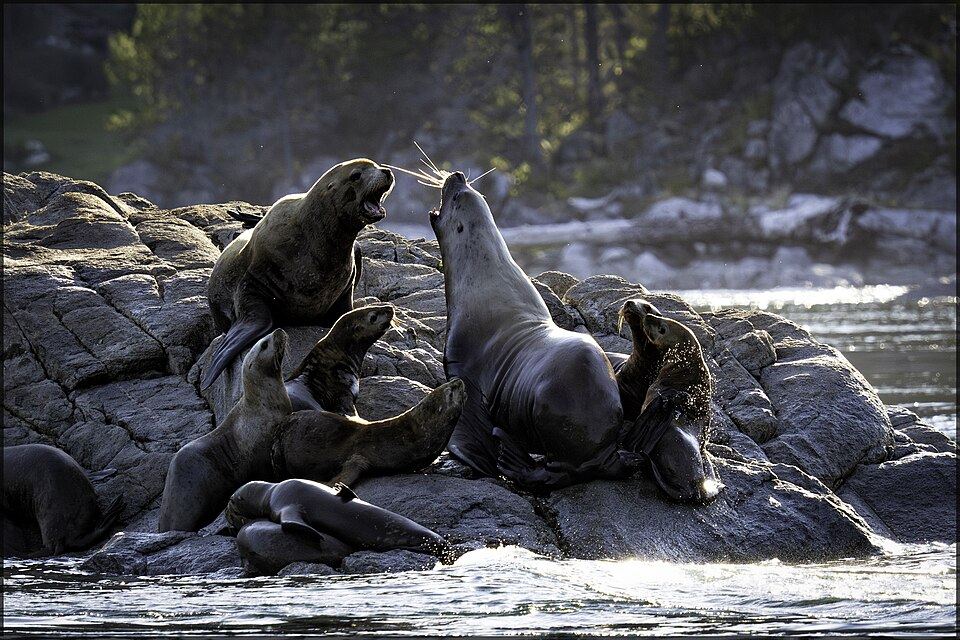
Photo: marneejill · CC BY-SA 2.0 (May be cropped or resized)
Zalophus californianus
U.S. national list: unknown
Basic stats
Diet
Fish and squid
Habitat
Coastal waters; hauls out on sandy or rocky beaches, jetties, docks and buoys
Range
Pacific coast of North America from southeast Alaska to central Mexico, including the Gulf of California
Litter size
1 pup
Gestation period
About 11 months
Size
Males 2.5–2.7m long; females about 2.1m
Weight
Males around 350kg; females around 100kg
The California sea lion is a coastal eared seal that differs markedly between the sexes. Adult males reach 2.5–2.7 m and about 350 kg, with pelage from light brown to black, typically dark brown, a thick neck and a tufted sagittal crest that gives a domed forehead. Females and juveniles are tawny brown and flatter-headed, around 2.1 m and 100 kg; pups are black or dark brown at birth. Both sexes have long, narrow muzzles (Wikipedia, general species account). The Handbook gives higher figures, 390 kg or more for males and 110 kg for females (GBIF description, Otariidae). Another spelling is Californian Sea Lion.
It hauls out on sandy or rocky beaches and also on jetties, buoys, docks and boats, and is common in bays, harbours and estuaries. Males hold territories and breeding is in May–July, with a single pup born after about 11 months; females gather in groups on the beach that roll and mount one another. Males tend to migrate north after breeding, some as far as British Columbia and Alaska, while Gulf of California animals are more sedentary. Typical foraging dives stay under 80 m and three minutes, with a maximum of 274 m recorded. Orcas and sharks are marine predators (GBIF description, Otariidae).
Where to see California Sea Lion in the USA
GBIF records grouped by protected area. They show where the species has been reported, not that it is there now, and they are not population counts.
Recorded in 104 protected areas (1928–2026). The 8 with the most records:
- Monterey Bay National Marine Sanctuary: 2,429 records (1928–2026)
- Año Nuevo State Marine Reserve: 862 records (1928–2026)
- Año Nuevo State Park: 832 records (1928–2026)
- San Diego-La Jolla Underwater Park: 573 records (1963–2026)
- Matlahuayl State Marine Reserve: 361 records (2009–2026)
- Greater Farallones National Marine Sanctuary: 344 records (1936–2026)
- Golden Gate National Recreation Area: 189 records (1945–2026)
- Point Reyes National Seashore: 185 records (1950–2026)
Quick answers
- What does the California Sea Lion eat?
- Fish and squid
- What habitat does the California Sea Lion live in?
- Coastal waters; hauls out on sandy or rocky beaches, jetties, docks and buoys
- Where is the California Sea Lion found?
- Pacific coast of North America from southeast Alaska to central Mexico, including the Gulf of California
- What is the litter size of the California Sea Lion?
- 1 pup
- How long is the gestation period of the California Sea Lion?
- About 11 months
- How big is the California Sea Lion?
- Males 2.5–2.7m long; females about 2.1m
- How much does the California Sea Lion weigh?
- Males around 350kg; females around 100kg