
 Wildlife
of USA
Black-headed Gull
Gulls, Terns & Jaegers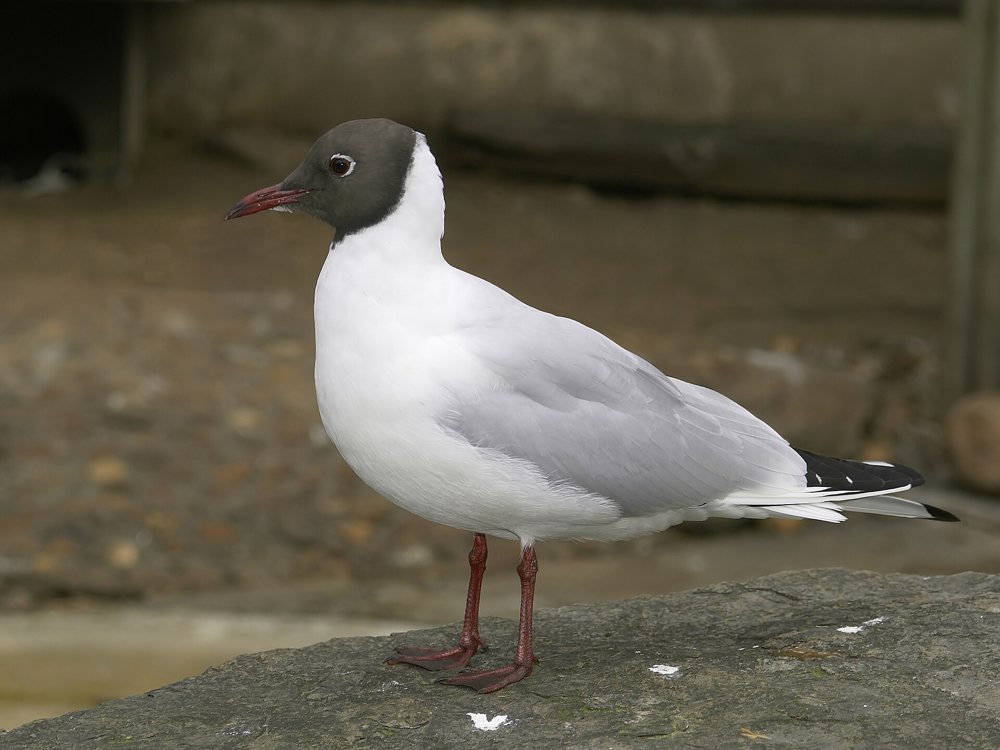
Photo: Hans Hillewaert · CC BY-SA 3.0 (May be cropped or resized)
Chroicocephalus ridibundus
U.S. national list: unknown
Basic stats
Diet
Invertebrates, fish, seeds, scraps and carrion
Habitat
Marshes, lakes and reed beds when breeding; varied inland wetlands, fields, towns, estuaries and coasts at other seasons
Range
Breeds across much of Europe and northern Asia, with a small population in eastern Canada; winters farther south across Eurasia and northern Africa
Clutch size
Usually 3 eggs
Incubation period
About 22 days
Size
34–39cm
Wingspan
100–110cm
Weight
Averages about 284g
The Black-headed Gull is a small gull whose breeding hood is chocolate-brown rather than truly black. It otherwise has a white body, pale grey back and wings, red bill and legs, and dark wingtips; in winter the hood is replaced by dark marks behind the eyes. A white leading edge on the outer wing is prominent in flight. Adults measure 34–39 cm, span 100–110 cm and average about 284 g (Wikipedia, general species account; AVONET, Tobias et al. 2022).
Across the Palearctic, the species breeds colonially in reed beds, marshes and on lake islands; a small breeding population also occurs in eastern Canada. Many birds move south or west during winter and gather socially at feeding and roosting sites. This adaptable gull takes insects, worms, fish, seeds, scraps and carrion in wetlands, fields and towns. Ground nests usually contain three eggs, with incubation averaging about 22 days (Wikipedia, general species account; EltonTraits, Wilman et al. 2014; AnAge).
Where to see Black-headed Gull in the USA
GBIF records grouped by protected area. They show where the species has been reported, not that it is there now, and they are not population counts.
Recorded in 138 protected areas (1949–2024). The 8 with the most records:
- Loch Raven Reservoir Cooperative Wildlife Management Area: 531 records (2010–2016)
- John Heinz National Wildlife Refuge at Tinicum: 421 records (2016–2019)
- Jones Beach State Park: 387 records (1974–2024)
- Cape Henlopen State Park: 330 records (1995–2024)
- Pinelands National Reserve: 321 records (2004–2024)
- Jacques Cousteau National Estuarine Research Reserve: 253 records (2004–2024)
- Brigantine National Wildlife Refuge: 252 records (2015–2024)
- Chincoteague National Wildlife Refuge: 242 records (1983–2023)
Quick answers
- What does the Black-headed Gull eat?
- Invertebrates, fish, seeds, scraps and carrion
- What habitat does the Black-headed Gull live in?
- Marshes, lakes and reed beds when breeding; varied inland wetlands, fields, towns, estuaries and coasts at other seasons
- Where is the Black-headed Gull found?
- Breeds across much of Europe and northern Asia, with a small population in eastern Canada; winters farther south across Eurasia and northern Africa
- How many eggs does the Black-headed Gull lay?
- Usually 3 eggs
- How long are the eggs of the Black-headed Gull incubated?
- About 22 days
- How big is the Black-headed Gull?
- 34–39cm
- What is the wingspan of the Black-headed Gull?
- 100–110cm
- How much does the Black-headed Gull weigh?
- Averages about 284g