
 Wildlife
of USA
Beringian Ermine
Otters, Wolverines & Mustelids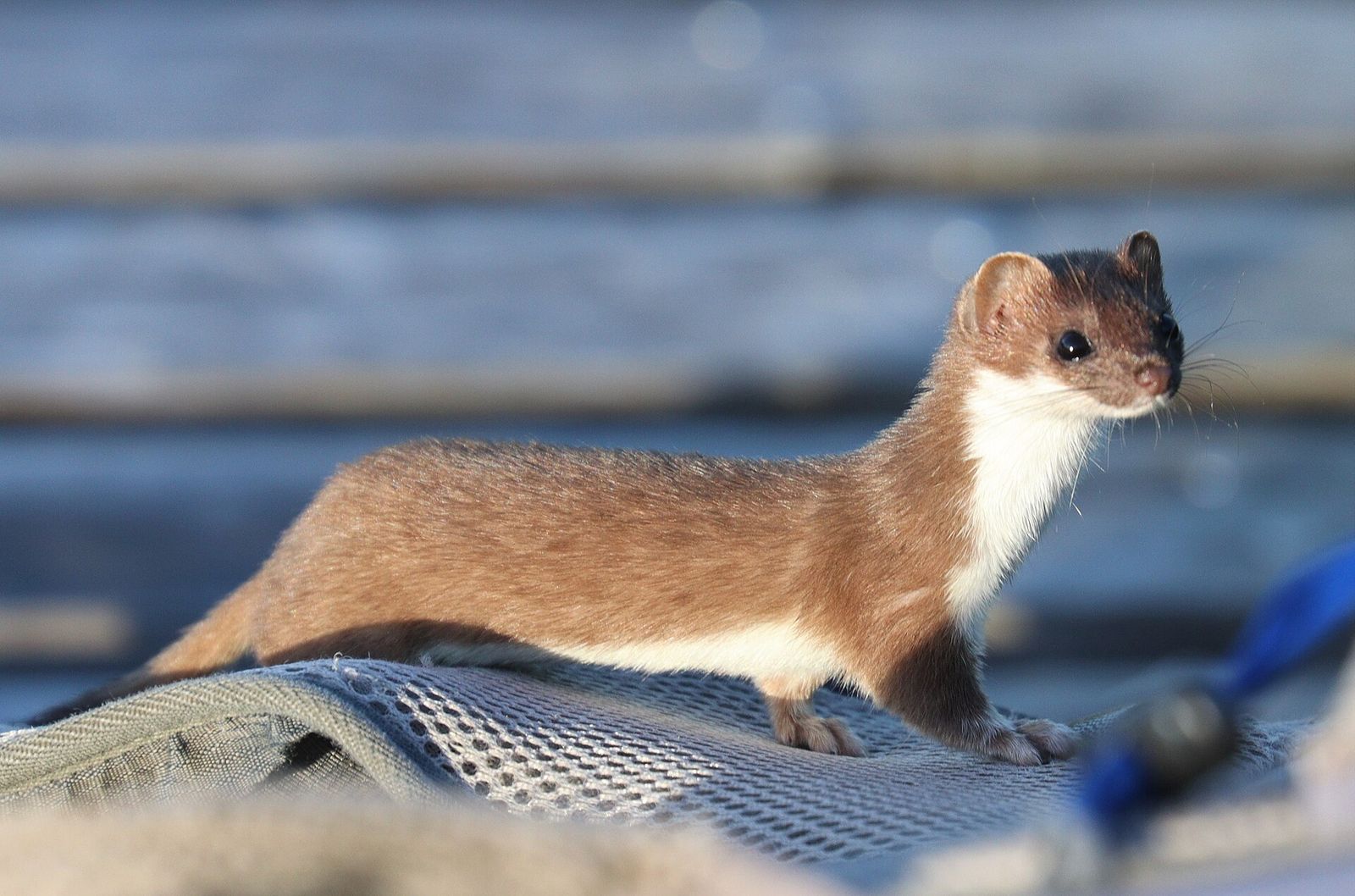
Photo: Alpsdake · CC BY-SA 4.0 (May be cropped or resized)
Mustela erminea
U.S. national list: unknown
Basic stats
Diet
Primarily rodents and lagomorphs; also birds, fish, shrews, and occasional reptiles or amphibians
Habitat
Northern temperate and boreal landscapes
Range
Eurasia and Alaska under the modern restricted species concept
The stoat, or Eurasian ermine, is a slender mustelid with short legs, a long neck, and a tail ending in a black tip. Summer animals are brown above and pale below; across colder parts of the range the coat turns white in winter while the black tail tip remains. This combination separates a winter stoat from the least weasel, whose tail lacks the persistent black end. A 2021 revision restricted Mustela erminea to Eurasia and Alaska, separating most North American populations as M. richardsonii and an island form as M. haidarum. (Wikipedia, general species account)
Mouse-like rodents dominate the diet, but stoats also take pikas, hamsters, water voles, rabbits, birds, fish, and shrews, with reptiles, amphibians, and insects eaten less often. Their narrow bodies let them pursue prey into burrows, and males more often tackle large prey than females. Those points are therefore omitted rather than borrowed from European populations or from the recently separated American ermine. (Wikipedia, general species account)
Where to see Beringian Ermine in the USA
GBIF records grouped by protected area. They show where the species has been reported, not that it is there now, and they are not population counts.
Recorded in 67 protected areas (1890–2026). The 8 with the most records:
- Carlos Avery Wildlife Management Area: 141 records (1937–1977)
- Tongass/Chatham National Forest: 62 records (1998–2013)
- Arctic National Wildlife Refuge: 49 records (1912–1958)
- Sunrise Unit: 33 records (1937–1957)
- Cloquet Valley State Forest: 26 records
- William H. Houlton Conservation Area: 25 records (1923–1927)
- Gates of the Arctic National Park and Preserve: 23 records (1948–1967)
- Gifford Pinchot National Forest: 16 records (1948–1986)
Quick answers
- What does the Beringian Ermine eat?
- Primarily rodents and lagomorphs; also birds, fish, shrews, and occasional reptiles or amphibians
- What habitat does the Beringian Ermine live in?
- Northern temperate and boreal landscapes
- Where is the Beringian Ermine found?
- Eurasia and Alaska under the modern restricted species concept